
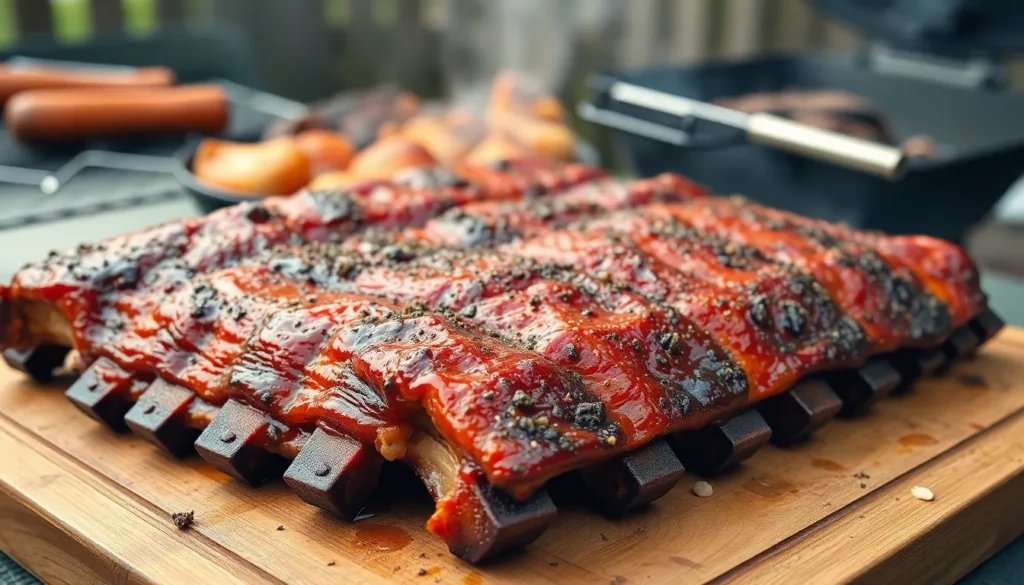
Pork ribs are the culinary equivalent of a warm hug on a plate. But before diving into that deliciousness, there’s one burning question: what temp is pork ribs done? Cooking ribs to the perfect temperature is like finding the holy grail of barbecue—too low, and you’ve got chewy meat; too high, and you risk turning your dinner into a dry disappointment.
Fear not, meat lovers! Understanding the magic number for perfectly cooked pork ribs can elevate your grilling game from “meh” to “wow!” Whether you’re a backyard BBQ warrior or just trying to impress friends at your next cookout, knowing when those ribs are ready is crucial. Let’s explore the ideal temperature that’ll have everyone licking their fingers and begging for seconds.
Understanding Pork Ribs
Pork ribs offer rich flavor and tenderness when cooked correctly. Several varieties exist, each with unique characteristics.
Types of Pork Ribs
Spare ribs, also known as side ribs, originate from the belly area, providing a meatier option. Baby back ribs come from the loin, known for their tenderness and smaller size. St. Louis ribs are a trimmed version of spare ribs, making them easier to cook and serve. Each type delivers a different experience, so understanding these differences helps in selecting the best cut for barbecue.
Importance of Cooking Temperature
Achieving the right cooking temperature enhances flavor and texture. Pork ribs require an internal temperature of 190-203°F for optimal tenderness. Cooking within this range allows connective tissues to break down, resulting in juicy, tender meat. Monitoring temperature ensures ribs don’t end up chewy or dry. A meat thermometer serves as a crucial tool in this process, providing accurate readings.
Ideal Internal Temperature for Pork Ribs
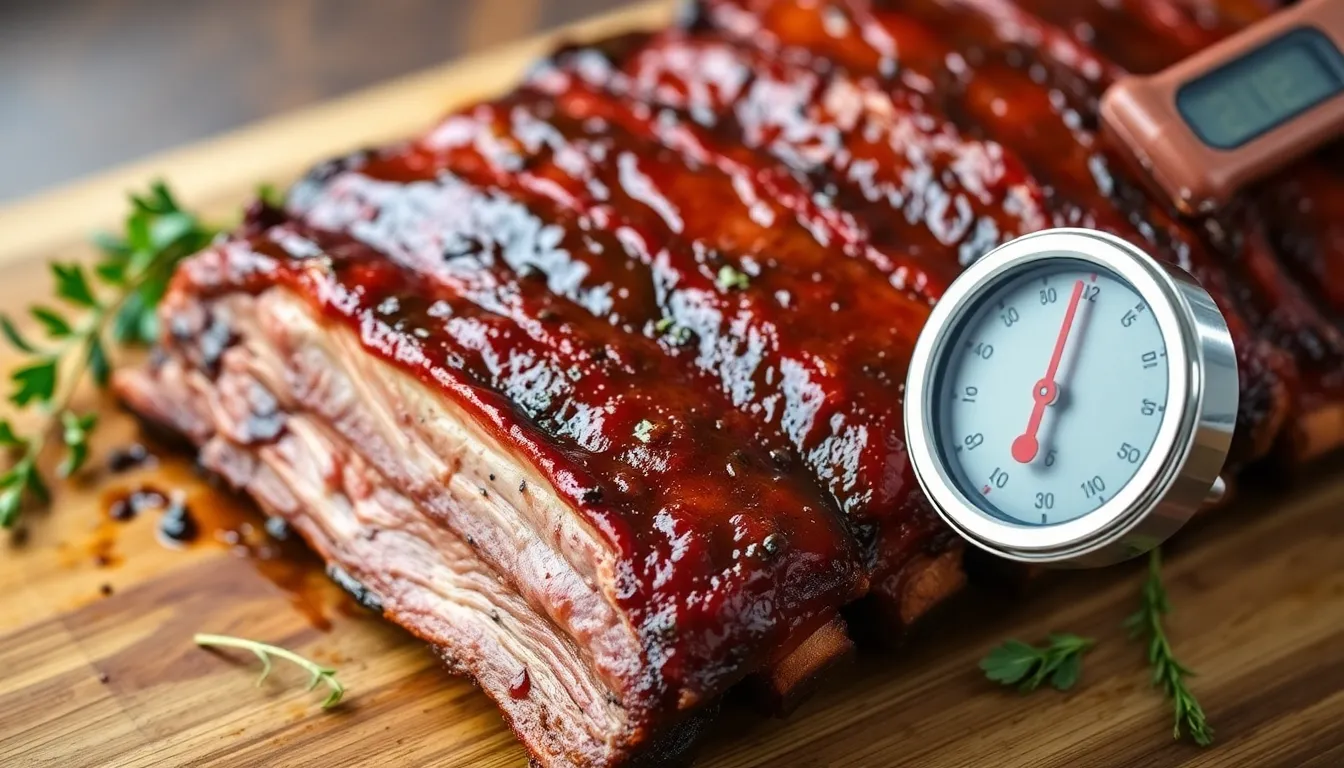
Achieving the ideal internal temperature for pork ribs ensures tender, juicy meat that enhances any barbecue experience.
Safe Minimum Temperature
The USDA states that pork must reach a minimum internal temperature of 145°F to ensure safety. This temperature permits harmful bacteria to be destroyed, making the meat safe for consumption. However, achieving only this minimum does not guarantee optimal tenderness. For ribs, it is essential to cook them beyond this point, as connective tissues require additional heat to break down effectively.
Optimal Cooking Temperature for Tenderness
For perfectly tender pork ribs, an internal temperature of 190-203°F is crucial. At this range, collagen and connective tissues break down, resulting in juicy meat that easily pulls away from the bone. Techniques like slow-cooking or smoking help reach this desired temperature while maintaining flavor. Using a reliable meat thermometer aids in monitoring the cooking process and ensures the right texture, leading to a satisfying dining experience.
Cooking Methods for Pork Ribs
Cooking methods greatly influence the taste and texture of pork ribs. Two popular methods are smoking and grilling, each offering unique advantages.
Smoking Pork Ribs
Smoking pork ribs involves low temperatures and long cooking times, allowing flavors to develop deeply. The ideal smoking temperature ranges from 225°F to 250°F. This method often takes four to six hours, depending on rib type and size. Using hickory, apple, or cherry wood enhances the natural flavors of the meat. A key point lies in applying a dry rub or marinade before smoking, which adds extra seasoning. Monitoring internal temperature ensures tenderness, aiming for 190°F to 203°F for the best results.
Grilling Pork Ribs
Grilling pork ribs can be a faster method while still delivering great flavor. Setting the grill to medium heat creates an optimal cooking environment, typically around 300°F. Cooking times generally range from two to three hours for spare ribs or baby backs. Covering the ribs with foil during the first half retains moisture and prevents drying. Sweet barbecue sauces often add a tasty glaze during the last half hour of cooking. Checking the internal temperature is crucial; ribs should ideally reach 190°F to 203°F for that perfect tenderness.
Tips for Checking Doneness
Ensuring pork ribs reach the right doneness is essential for optimal flavor and tenderness. A few practical tips can help achieve perfect results every time.
Using a Meat Thermometer
A reliable meat thermometer offers the most accurate way to gauge doneness. Insert the probe into the thickest part of the meat, avoiding contact with bone for precise readings. Aim for an internal temperature between 190°F and 203°F. This range allows the connective tissues to break down, enhancing tenderness significantly. Some thermometers feature instant read capabilities, making it easy to check without losing heat from the grill or smoker. Regular calibration of the thermometer ensures accuracy, allowing for consistent results.
Visual Cues of Doneness
Visual cues also indicate when pork ribs are ready. Look for the meat pulling away from the bone, showcasing a clear separation. The surface should develop a beautiful caramelized crust, a result of the Maillard reaction during cooking. Juices should run clear, signaling that the meat is cooked properly. When ribs bend easily with a slight break, it’s a good sign they’re tender. Utilizing these visual indicators in conjunction with a thermometer provides a comprehensive assessment of doneness.
Perfectly cooked pork ribs are a true delight for any barbecue enthusiast. By focusing on the right internal temperature of 190-203°F, cooks can ensure tender and juicy meat that pulls away easily from the bone. Techniques like slow-cooking or smoking not only enhance flavor but also contribute to achieving that ideal doneness.
Using a reliable meat thermometer and paying attention to visual cues can elevate the cooking experience. Whether grilling or smoking, these methods promise satisfying results. With practice and attention to detail, anyone can master the art of cooking pork ribs, making every barbecue a memorable occasion.


